Last week, the US Department of Justice (DOJ) released an unusual policy statement intended to “remind the public” of foreign agent laws, including the Foreign Agents Registration Act (FARA) and its sister statute, 18 USC § 951. This release may come as a surprise given the current administration’s prior actions. Notably, in February 2025, then-Attorney General Pam Bondi seemingly put an end to (or at least an extended pause on) robust criminal enforcement of FARA, narrowing such cases to more traditional espionage-like activity by foreign government actors. Since then, however, the DOJ has thrice hinted at the possibility of expanded enforcement. Still, the questions remain: What does it mean, and is it real?
Background
The FARA and broader foreign-agent enforcement landscape between February 2025 and now has largely tracked Bondi’s memo. While enforcement did not altogether cease, enforcement of the foreign agent laws was limited (especially compared with the relatively expansive use of these statutes toward the end of the Biden administration). To be sure, a handful of cases that were previously charged continued forward, and there was at least one new case initiated wherein an individual pleaded guilty to FARA violations. But the volume of enforcement actions was sharply down and at least one high-profile case saw the DOJ specifically target and dismiss FARA charges, while continuing to advance this prosecution more broadly.
The first indication of a potential change came in September 2025, when the administration signaled (via a National Security Presidential Memorandum or NSPM-7) an increased willingness by the DOJ to use FARA to investigate nongovernmental organizations and American citizens with close ties to foreign governments and influence networks. Last month, the DOJ provided another signal of potential change, stating in a broader update on its regulatory outlook that it intends to publish a final rule in connection with its yearslong FARA rulemaking effort.
DOJ’s policy statement
Then, on September 16, the DOJ put out a policy statement (styled as a press release) titled, “Liability for Unregistered Foreign Agents.” In the statement, the DOJ sought to “remind the public of federal laws that require individuals to register as foreign agents when they act in the United States at the direction or control of a foreign government or foreign principal,” and warned that failure to do so could result in “civil and criminal liability.” The DOJ continued, “Two such federal laws—the Foreign Agents Registration Act … and 18 U.S.C. § 951—impose disclosure or notification obligations when a person acts in the United States as an agent of a foreign principal or foreign government.”
One portion of the policy statement may offer a clue as to the kinds of fact patterns where the DOJ may now view FARA and § 951 as useful tools: instances where an individual acts on behalf of a foreign power to engage in “public demonstrations designed to further the propaganda or other goals of the foreign power.”
The statement comes several months after Senator Josh Hawley wrote a letter to the DOJ requesting that it open an investigation into “the funding and coordination of recent so-called ‘grassroots’ anti-Immigration and Customs Enforcement (ICE) campaigns in Minnesota and nationwide.” According to Hawley’s letter, while these campaigns are “presented as organic civil protests,” they are “in fact substantially financed and professionally coordinated by wealthy left-wing organizations and individuals—including those with possible ties to the Chinese Communist Party.” Hawley then expressly noted that “such conduct may violate federal prohibitions,” including FARA.
Hawley’s letter follows similar activity by the House Committee on Oversight and Government Reform throughout 2025, which also identified FARA as a potential tool for targeting foreign efforts “to sow discord in the United States, including most recently through ongoing riots and violence in Los Angeles, California.” Other members of Congress have likewise pushed the DOJ to consider whether climate- and clean energy-related nonprofits have also run afoul of FARA. State attorneys general have urged the same.
An unexpected policy statement by the DOJ is always noteworthy. Even more so when it appears to revive an enforcement tool that has largely lain dormant for the past 20 months. And the alignment of this statement with congressional efforts urging FARA enforcement in this space should serve as a wake-up call: If you – or your organization – have ties (financial or otherwise) to foreign actors, and you advocate publicly, you would do well to pay attention.
How we can help
Cooley’s white collar defense and investigations group consists of former prosecutors and high-level government officials who bring decades of experience to all aspects of white collar and regulatory defense. We have extensive experience counseling clients on FARA obligations and defending individuals and organizations in DOJ investigations and enforcement actions relating to FARA. Individuals and companies that receive an inquiry or notice indicating they may be the subject of a government investigation can contact a member of our team.
Contributors
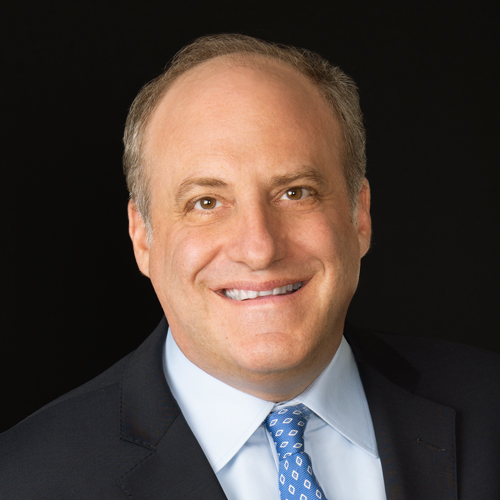
Andrew Goldstein
Brian Nelson
John Bostic